

— Traditionally attributed to Abba Nilus
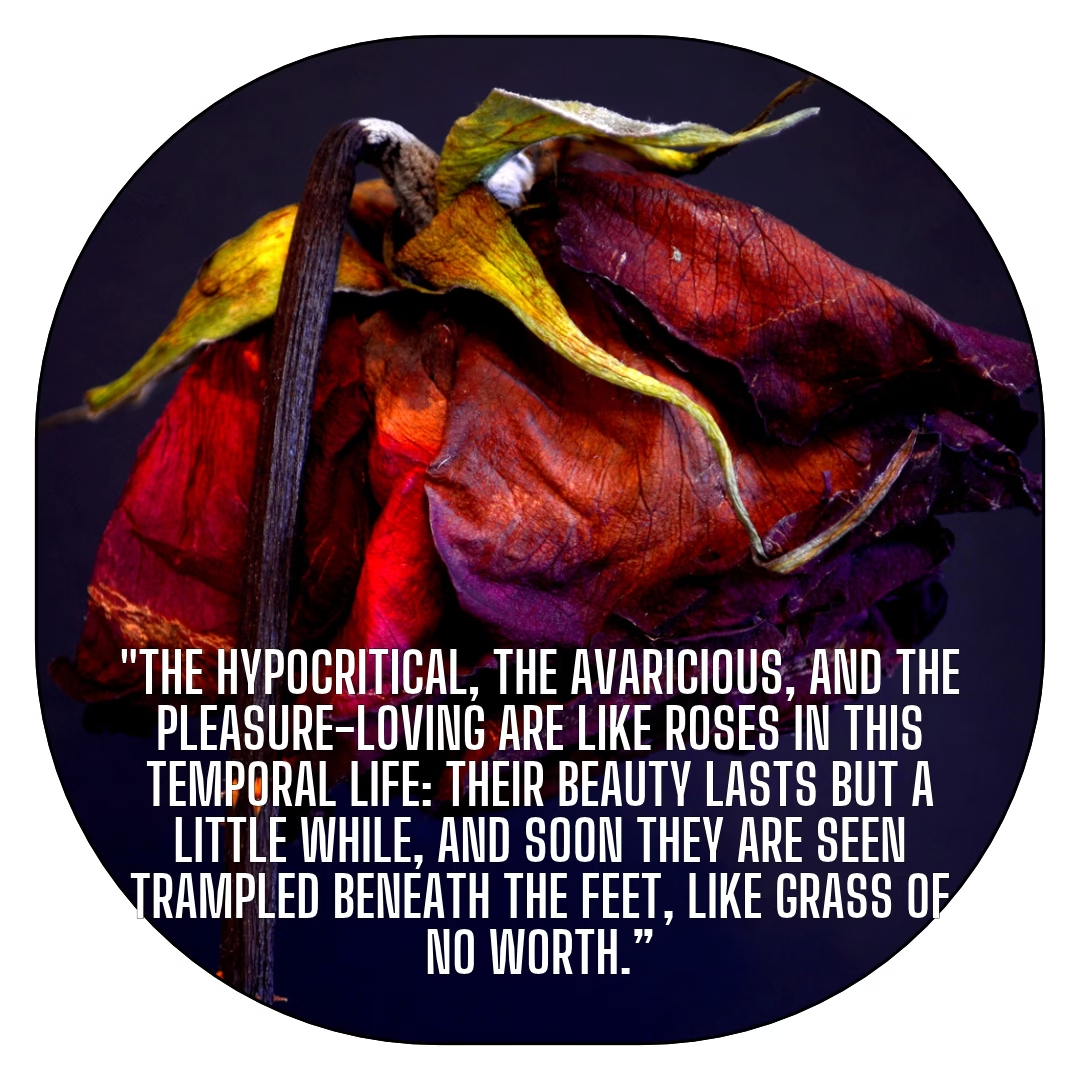
“The hypocritical, the avaricious, and the pleasure-loving are like roses in this temporal life: their beauty lasts but a little while, and soon they are seen trampled beneath the feet, like grass of no worth.”
There is something particularly striking about the image employed in this short spiritual admonition: a rose, beautiful to behold, fragrant, delicate, and admired by all, yet possessing a beauty that lasts but a very short time.
The rose may attract the eye, delight the senses, and inspire admiration. But once its brief season has passed, its petals fall, its fragrance disappears, and it is left to be trampled beneath the feet. Such is the image presented to us of those who live according to hypocrisy, greed, and the love of sensual pleasure.
The lesson is not merely about the brevity of human life. It concerns the emptiness of a life built upon appearances rather than virtue.
The deception of outward appearance
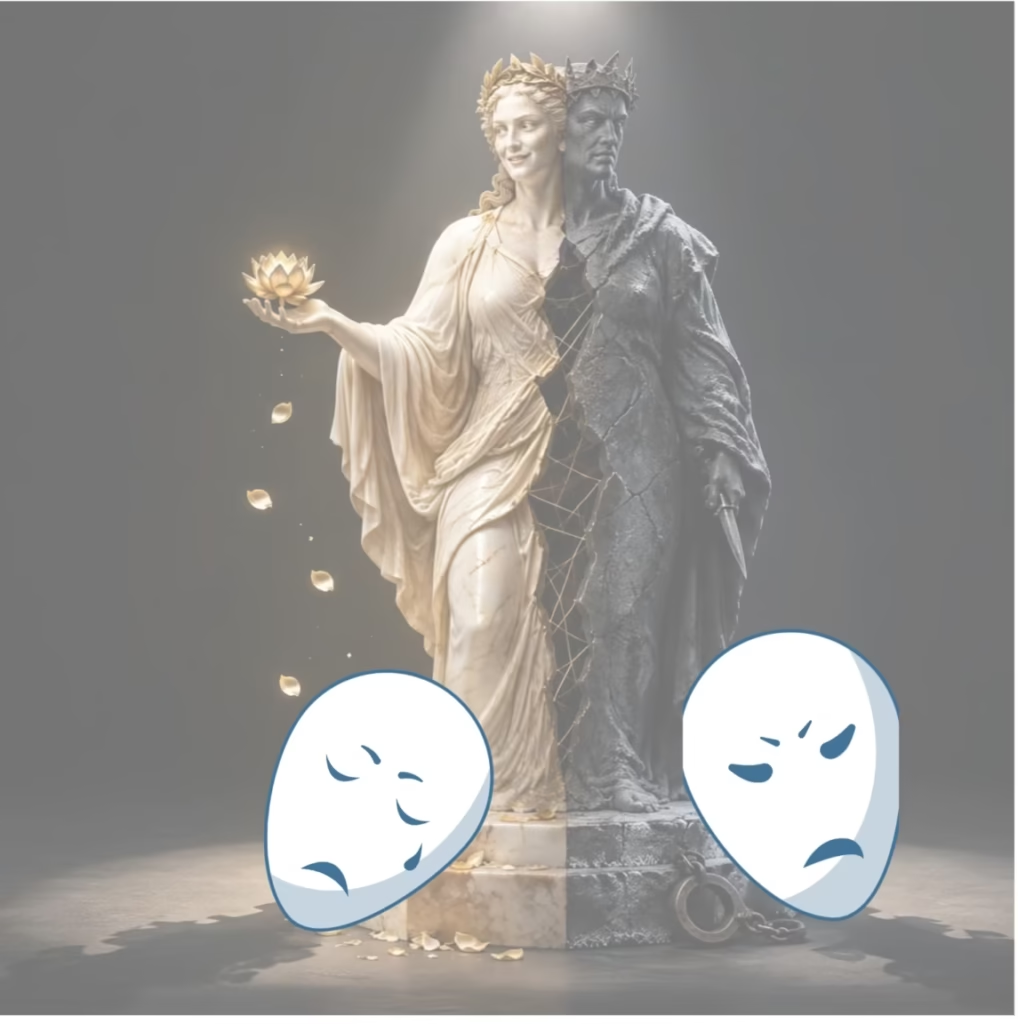
Hypocrisy is particularly dangerous because it can imitate virtue without possessing it. A person may speak eloquently about God, display an appearance of piety, and even acquire the admiration of others, while the heart remains far removed from genuine repentance and humility.
But spiritual life cannot be measured by appearances. God does not judge according to the impression we create in the eyes of men. He sees the hidden movements of the heart.
The hypocrite may flourish in the estimation of the world, but such glory has no lasting foundation.
The poverty of greed
The avaricious person makes the acquisition of possessions, wealth, influence, and worldly security the principal purpose of life. Yet everything accumulated in this world is temporary.
Our Lord reminds us:
“Lay not up for yourselves treasures upon earth, where moth and rust doth corrupt, and where thieves break through and steal: but lay up for yourselves treasures in heaven” (Matthew 6:19–20).
The tragedy of greed is that it persuades a person to sacrifice eternal things for things that cannot endure.
The illusion of pleasure
Likewise, those who make pleasure the governing principle of their existence are pursuing something that cannot satisfy the human soul.
The pleasures of the body, when detached from moderation, purity, and the fear of God, become masters rather than servants. They promise happiness but cannot provide lasting peace.
The Fathers of the Church repeatedly remind us that the passions do not bring freedom. Rather, they enslave the very person who believes himself to be enjoying liberty.
What, then, truly endures?
The Holy Scriptures provide the answer through another image of flowers and grass:
“All flesh is grass, and all the goodliness thereof is as the flower of the field: The grass withereth, the flower fadeth: but the word of our God shall stand for ever” (Isaiah 40:6, 8).
Our earthly existence is brief. Beauty fades, wealth passes away, human admiration is forgotten, and worldly accomplishments eventually disappear.
But the fruits of a life lived in Christ are not subject to the same decay.
Humility, repentance, mercy, love, purity of heart, and faithfulness to God are not ornaments intended to impress other people. They are the fruits of an authentic spiritual life.
The Christian must therefore ask himself not how impressive his life appears to others, but what remains of it before God.
A rose may be beautiful for a day, but its beauty cannot preserve it from withering. The soul, however, which is adorned with the virtues and united to Christ, seeks a beauty that does not fade.
Let us not spend our brief earthly existence cultivating the appearance of holiness while neglecting its substance. Let us not exchange eternity for the fleeting admiration of men, nor the treasures of heaven for the passing pleasures of this world.
For what is beautiful in the eyes of men may soon be trampled underfoot, but what is cultivated in the heart through repentance and the grace of God has an eternal value.
The question is not how beautifully we bloom before the world, but what fruit we bear before God.