
The Call to Transfiguration, Not Self-Justification
By the Grace of God we are transformed.
Ε.Φ.
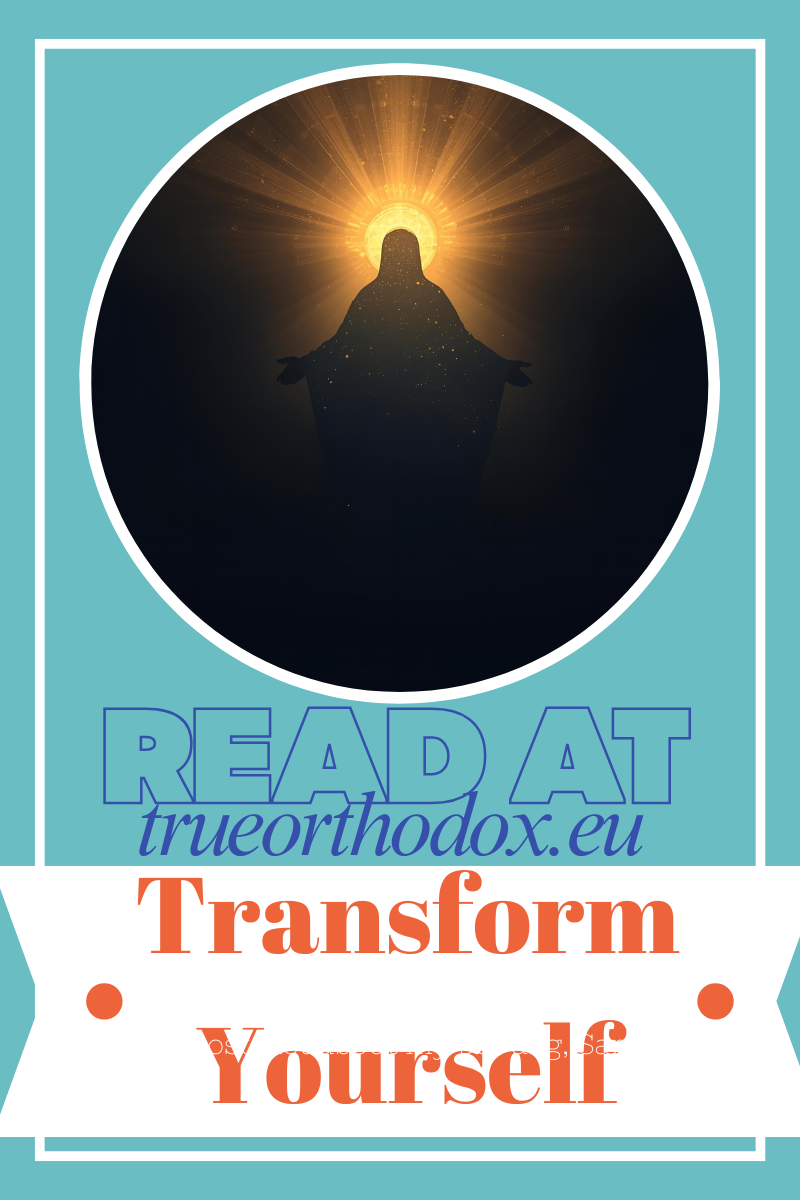
At the heart of Orthodox Christian life stands not self-acceptance, but transfiguration. We are not called merely to recognize who we are, but to become what God created us to be. The Feast of the Transfiguration of our Lord Jesus Christ reveals this truth with divine clarity: human nature, united to God, is called to be illumined, changed, and glorified.
On Mount Tabor, Christ did not appear as something other than Himself, but revealed what had always been hidden beneath the humility of His flesh—the uncreated Light of divinity. As Saint Gregory Palamas teaches:
“The light of the Lord’s Transfiguration does not come into being and then pass away; it is eternal, uncreated, and the glory of the divine nature.”
In this revelation, the Church sees not only Christ’s glory, but our own calling. The hymns of the Feast proclaim that Christ was transfigured “showing the disciples the glory as much as they could bear.” The implication is unmistakable: life in Christ is a movement from darkness to light, from corruption to purity, from sin to holiness.
This understanding stands in sharp contrast to the spirit of the modern world. Today we are taught that peace is found by accepting ourselves exactly as we are, that struggle is unhealthy, that striving to change is oppressive, and that repentance is a form of self-rejection. The language of “authenticity” has replaced the language of holiness. Faults are renamed as identities, passions as virtues, and sin as something to be celebrated rather than healed.
Yet the Fathers speak with one voice against such deception. Saint Isaac the Syrian writes:
“This life has been given to you for repentance; do not waste it on vain pursuits.”
Throughout the life of the Church, we read of men and women who were not affirmed in their sins, but transformed by grace. Former thieves became saints. Murderers became martyrs. Fornicators became ascetics. Persecutors became apostles. The Church does not hide these histories; she proclaims them loudly, because they testify to the power of repentance and the mercy of God.
Saint Moses the Ethiopian was once a violent criminal, enslaved to his passions. He did not “accept himself” as he was. He struggled, fasted, prayed, wept, and fought against the darkness within him. Through repentance and humility, he was transfigured into a radiant vessel of grace. Saint John Climacus reminds us:
“Repentance is the renewal of baptism, a contract with God for a second life.”
The same pattern is found in countless lives: Saint Mary of Egypt, Saint Cyprian, Saint Paul the Apostle. Their sanctity did not come from embracing their former lives, but from dying to them. As Saint Maximus the Confessor teaches:
“He who turns away from sin turns toward God; and he who draws near to God is illumined.”
Orthodox Christianity is not a religion of self-esteem; it is a path of the Cross. Yet it is precisely this path that leads to true freedom. Repentance is not self-hatred, but truth. It is the courage to say: I am fallen, but I am not abandoned.
To strive against our passions is not to deny ourselves; it is to reclaim our true self in Christ. Grace does not leave us as we are. Grace transfigures. Saint Gregory of Nyssa states clearly:
“The goal of a virtuous life is likeness to God.”
The Feast of the Transfiguration reminds us that Christianity is not about managing our sins or justifying our weaknesses, but about ascending the mountain with Christ. Slowly, painfully at times, yet always facing the Light. As Orthodox Christians, we do not ask the world to accept our faults; we ask God to heal them.
And He does—when we are willing to be changed.